Harrison Ford. The name alone conjures images of fedoras, whips, blaster pistols, and an unparalleled legacy of cinematic heroism. For decades, he defined the reluctant action star, gracing the silver screen as archeologists, space smugglers, and even presidents. So, when news broke that this titan of cinema, a man famously wary of long-term franchise commitments, was joining the Marvel Cinematic Universe, the collective internet paused. His entry isn't just another casting announcement; it's a profound statement on Harrison Ford's Action Legacy & MCU Fit, a choice that deepens his already immense impact on Hollywood.
It begs the question: What compels a man who reportedly begged Star Wars to kill off Han Solo and once declared he was "never playing Indiana Jones again" to step into the world of superheroes? As we'll uncover, Ford's decision isn't a betrayal of his past but a fascinating evolution, an embrace of change that speaks volumes about his perspective on modern filmmaking and the enduring appeal of the MCU.
At a Glance: Harrison Ford's Unexpected MCU Journey
- The Surprise: Harrison Ford, known for his reluctance toward long-term franchise roles, has joined the Marvel Cinematic Universe.
- His Role: He takes over the iconic character of Thaddeus "Thunderbolt" Ross, previously portrayed by the late William Hurt.
- Confirmed Appearances: Ford is confirmed for Captain America: Brave New World (2025).
- Potential Future: Strong speculation links him to Thunderbolts* (2025) and a possible transformation into Red Hulk.
- His Reason: Ford sees it as "participating in a new part of the business" that produces "good experiences for an audience," embracing change rather than regretting it.
- Legacy Impact: His involvement adds significant gravitas and an endorsement of the MCU's continued relevance, potentially attracting new fans.
The Legend Who Begged to Die: A Legacy Forged in Action (and Reluctance)
Before we delve into his Marvel future, it's essential to understand the monumental action legacy Harrison Ford has built. From the dusty ruins where Indiana Jones unearthed ancient artifacts to the gritty cantinas where Han Solo charted hyperspace routes, Ford crafted an archetype: the cynical, world-weary hero who, despite his best efforts, always found himself doing the right thing. He brought a grounded, often gruff realism to fantastical worlds, making his characters relatable amidst extraordinary circumstances.
Think about it:
- Indiana Jones: A whip-cracking archaeologist who'd rather be teaching than battling Nazis, but inevitably becomes humanity's last hope.
- Han Solo: A roguish smuggler with a heart of gold, forever trying to outrun his past, but always there for his friends.
- Rick Deckard: A haunted blade runner navigating a dystopian future, questioning his own humanity while hunting replicants.
These roles solidified Ford as a cultural icon, synonymous with adventure, wit, and a certain brand of grizzled charm. Yet, throughout his career, a consistent thread emerged: his aversion to being tied down by these very franchises. He famously lobbied for Han Solo's death for decades, feeling the character had run his course. His return as Indiana Jones for a fifth film was a carefully considered, and often doubted, endeavor. This deep-seated preference for new challenges over perpetual franchise commitments made his MCU announcement all the more baffling to many. Why, after such a storied career, and at a stage where he's earning critical acclaim for less physically demanding roles like Paul in Shrinking, would he jump aboard the biggest cinematic universe on the planet?
Why the MCU Now? Ford's Candid Revelation Beyond the Fedora
The news that Harrison Ford would be replacing the late, beloved William Hurt as Thaddeus "Thunderbolt" Ross was, as Collider aptly put it, "undeniably exciting" but "almost more confusing than anything." This wasn't just a veteran actor joining a blockbuster; this was the Harrison Ford, an actor whose career choices often reflected a desire to move beyond the shadow of his most famous roles. His explanation, however, cuts through the confusion with refreshing candor, offering a glimpse into a seasoned artist's evolving perspective.
In a recent interview, Ford pulled back the curtain, stating:
"I mean, this is the Marvel universe and I'm just there on a weekend pass. I'm a sailor new to this town. I understand the appeal of other kinds of films besides the kind we made in the '80s and '90s. I don't have anything general to say about it. It's the condition our condition is in, and things change and morph and go on. We're silly if we sit around regretting the change and don't participate. I'm participating in a new part of the business that, for me at least, I think is really producing some good experiences for an audience. I enjoy that."
This isn't an actor chasing a paycheck or a legacy. It's a pragmatic, open-minded veteran acknowledging the seismic shifts in the entertainment industry. "Things change and morph and go on. We're silly if we sit around regretting the change and don't participate." This line is key to understanding his Harrison Ford's Action Legacy & MCU Fit. It's not about replicating past glories; it's about active engagement with the present. He sees the MCU not as a lesser form of cinema, but as a "new part of the business" that delivers "good experiences for an audience," and he genuinely enjoys being a part of that.
This mindset is a powerful endorsement, particularly at a time when the MCU, in its post-Endgame era, faces increasing scrutiny and, for some, divisiveness. Yet, the brand's enduring pull, evidenced by the box office success of films like Deadpool & Wolverine and the streaming buzz around Agatha All Along, remains undeniable. Ford's willingness to join, even in the later stages of his career, signals a belief in the franchise's capacity to continue evolving and entertaining. It's a move that transcends mere acting; it's a veteran filmmaker's nod to the power and reach of modern serialized storytelling.
Stepping Into Thunderbolt Ross's Boots: A Pivotal Recasting
Harrison Ford's role in the MCU is not a minor cameo; he's taking on the significant character of Thaddeus "Thunderbolt" Ross, a general steeped in Marvel lore. Ross is a complicated figure, often an antagonist to the Hulk, driven by a deep-seated commitment to national security and an equally deep distrust of super-powered beings. He's a man of conviction, often to a fault, making him a fascinating foil for heroes.
The role was previously inhabited by the late William Hurt, who portrayed Ross with a gravitas and understated intensity across several MCU films, including The Incredible Hulk, Captain America: Civil War, Avengers: Infinity War, and Avengers: Endgame. Hurt's passing left a void, and the decision to recast such an established character was always going to be scrutinized. Choosing Harrison Ford isn't just a safe bet; it's a statement.
Ford brings an unparalleled authority and a sense of history to the role. Imagine his weathered gaze, his clipped delivery, and that signature blend of cynicism and integrity applied to a character like Ross. He's confirmed to appear in Captain America: Brave New World, the fourth solo Captain America movie, slated for release on February 14, 2025. This placement is no accident. Ross has historically been an adversary or uneasy ally to Captain America, and Ford's presence will undoubtedly add a formidable presence to the narrative.
What kind of Thunderbolt Ross can audiences expect from Ford? Given his history, it’s likely to be a portrayal that leans into the character's military discipline and world-weariness. He'll embody the seasoned general, a man who has seen too much, perhaps grown disillusioned, but whose core drive to protect remains. This interpretation could offer a fresh, perhaps more nuanced, take on a character often defined by his antagonism towards the Hulk. Ford's inherent moral complexity, honed through decades of playing characters who blur the lines between good and bad, makes him a perfect fit for a character like Ross.
The Path to Red Hulk? Unpacking Speculation and Potential
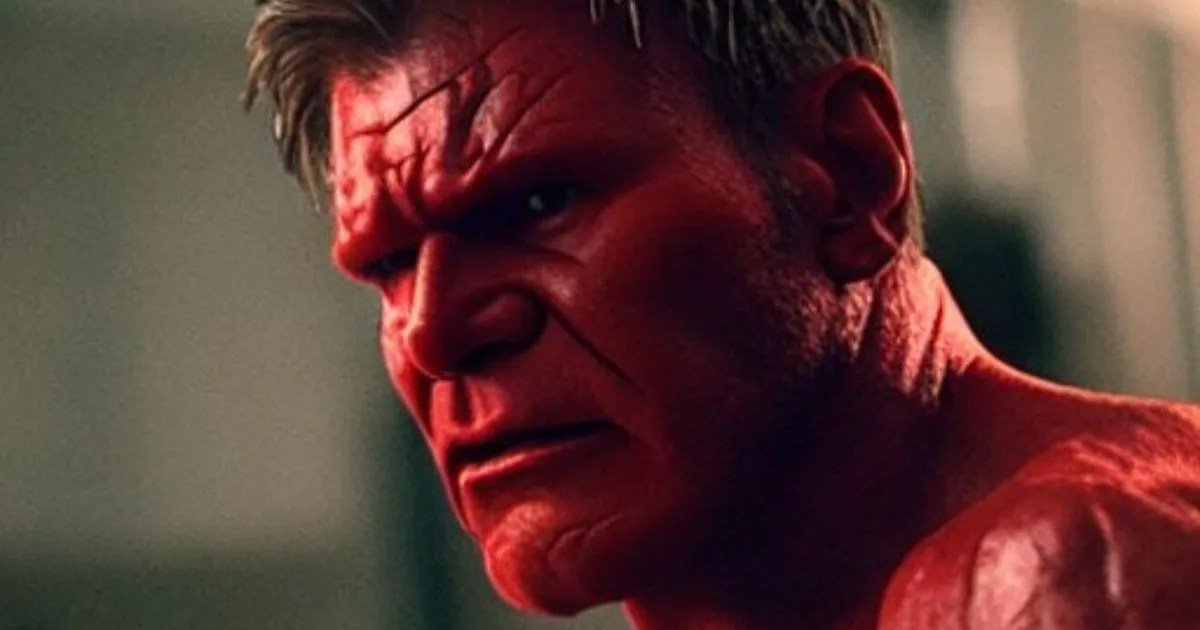
One of the most thrilling and persistent fan theories surrounding Ford's casting is the possibility of his transformation into the Red Hulk. For comic book fans, this isn't just speculation; it's a logical, almost inevitable, progression for the character of Thaddeus Ross.
What is Red Hulk?
In the Marvel Comics, after years of relentlessly pursuing the Hulk, General Ross undergoes a transformation himself, becoming the Red Hulk. Unlike the original Hulk, Red Hulk retains his intelligence and tactical cunning, but also possesses immense strength, heat generation, and a ruthless demeanor. He's often depicted as an anti-hero, operating in a moral grey area, making him a complex and compelling figure.
The idea of seeing Harrison Ford, even through heavy CGI and motion capture, embody such a physically powerful and emotionally conflicted character is incredibly exciting. It would be a stark departure from his traditional roles, yet entirely within the realm of the MCU's transformative narratives. It would fulfill a long-held fan desire to see Red Hulk on the big screen, and with an actor of Ford's caliber, it could be a truly memorable cinematic event. For those who want to dive deeper into the Red Hulk theories surrounding Harrison Ford's portrayal, the potential for this storyline is immense and could reshape the power dynamics of the MCU.
While there has been no official confirmation from Marvel Studios regarding Ford's Red Hulk transformation, the groundwork for it has been subtly laid in the comics, and the potential impact on the MCU is undeniable. It would be a fitting culmination of Ross's journey, from a relentless military man to a complex, super-powered individual, pushing Harrison Ford into an entirely new dimension of action heroism.
Beyond Brave New World: What About Thunderbolts*?
While his appearance in Captain America: Brave New World is confirmed, the question on many fans' minds is whether Harrison Ford will appear in subsequent MCU projects. The most immediate and logical next step would be Thunderbolts*, the film slated for release on May 2, 2025, following Captain America: Brave New World.
The premise of Thunderbolts* centers around a team of anti-heroes and reformed villains, often operating under government supervision. In the comics, Thunderbolt Ross is intrinsically linked to the Thunderbolts program, sometimes even leading them. Given Ford's casting as Ross, his involvement in a film titled Thunderbolts* seems almost a given.
However, Marvel has been notably coy about Ford's role in Thunderbolts*, and there's the mysterious asterisk in the title, Thunderbolts*. While Julia Louis-Dreyfus's Val (Valentina Allegra de Fontaine) appears to be positioned as the team's primary leader, Ross's history and authority within the military establishment make him an indispensable figure for such a clandestine operation. The studio's silence could merely be an attempt to keep Ford's involvement a significant reveal, ensuring maximum impact when it's finally announced.
If Ford does appear in Thunderbolts*, his presence would undoubtedly lend a formidable gravitas to the ensemble. His seasoned command and inherent dramatic weight would anchor the team, providing a compelling counterpoint to the more unpredictable anti-heroes. This film, with its focus on morally ambiguous characters, seems perfectly suited for Ford's knack for portraying complex, often reluctant, figures of authority. It's exactly the kind of "new part of the business" he might find intriguing.
Ford's Impact on the MCU's Future: A New Generation of Gravitas
Harrison Ford's entry into the MCU isn't just about recasting a character; it's a significant moment for the franchise itself. His presence brings an immediate, undeniable layer of gravitas and an endorsement of the cinematic universe's enduring power.
Think about the implications:
- Attracting New Audiences: While the MCU is a global phenomenon, Ford's involvement might pique the interest of older viewers or those who have felt disconnected from the more recent phases, drawing in a "new generation of fans" in an unexpected way.
- Validation for the Franchise: For an actor of Ford's stature, with his legendary career and selective approach to roles, to choose to participate in the MCU sends a powerful message. It validates the storytelling, the scale, and the cultural relevance of the superhero genre at a time when some critics question its artistic merit.
- A Bridge Across Eras: Ford represents a golden age of Hollywood action filmmaking. His presence in the MCU helps bridge that legacy with the modern blockbuster era, demonstrating that engaging storytelling and compelling characters can transcend generational and stylistic divides.
- Elevating the Ensemble: In an ensemble-heavy franchise like the MCU, Ford's acting prowess will undoubtedly elevate the scenes he's in, challenging his co-stars and adding a unique flavor to the established dynamic. Imagine the tension he could bring to a scene with Captain America or Val.
His decision underscores a larger truth about contemporary cinema: big, interconnected universes are here to stay, and truly seasoned actors are recognizing the unique opportunities they present. Ford isn't just showing up; he's actively "participating in a new part of the business," genuinely enjoying the experience of creating compelling content for a vast audience.
Embracing Change: Lessons from a Hollywood Icon
Harrison Ford's journey to the MCU, initially confusing, reveals itself to be a masterclass in adaptation and a powerful statement from one of Hollywood's most enduring figures. His candid reflection – that we'd be "silly if we sit around regretting the change and don't participate" – isn't just about his career; it's a broader philosophy for navigating an ever-evolving world.
Ford, who once seemed intent on distancing himself from the franchises that made him famous, now actively embraces the largest one of them all. This isn't a sign of creative fatigue; it's quite the opposite. It suggests a renewed energy, a curiosity about new forms of storytelling, and a desire to continue connecting with audiences in whatever medium they choose to engage with. He's demonstrating that a commitment to one's craft doesn't mean clinging to the past, but rather intelligently engaging with the present.
His move is a testament to:
- Professional Longevity: Staying relevant in Hollywood requires more than talent; it demands adaptability and an open mind.
- The Power of Storytelling: Regardless of the platform or genre, compelling narratives that resonate with audiences remain the ultimate goal.
- Defying Expectations: Ford has consistently surprised audiences throughout his career, and his MCU role is just the latest, and perhaps most intriguing, example.
The Next Chapter: What Harrison Ford's MCU Fit Means for You
As we look ahead to Captain America: Brave New World and the potential for a deeper dive into the world of the Thunderbolts and even Red Hulk, Harrison Ford's involvement is more than just a star turn. It's a fascinating evolution for an actor who has defined action for generations, and a clear signal that the MCU continues to attract top-tier talent willing to embrace new challenges.
His choice to join Marvel, rather than regretting the shifts in cinema, showcases a veteran who understands the pulse of modern entertainment. For audiences, it means the promise of seeing a legend bring his unique blend of intensity, world-weariness, and undeniable screen presence to a character ripe for complex exploration. Whether he's leading a task force or, indeed, turning red, Harrison Ford's MCU chapter is set to be another thrilling entry in an already unparalleled action legacy, proving that even the most iconic heroes aren't afraid to try something new. Get ready for a new brand of hero, or anti-hero, with a familiar, authoritative face.