Few characters in the Marvel Cinematic Universe embody the shifting sands of power, ambition, and personal vendetta quite like Thaddeus "Thunderbolt" Ross. From his initial portrayal by the late, great William Hurt, to his continuation by the legendary Harrison Ford, Ross’s presence has been a consistent, often antagonistic, force in the lives of Earth's mightiest heroes. His journey, marked by relentless pursuit and political maneuvering, ultimately culminates in a seismic transformation: his emergence as the terrifying Red Hulk. Understanding General Ross's MCU evolution and legacy isn't just about tracking a single character; it’s about tracing a vital thread that has continuously challenged the very definition of heroism and government oversight in a world grappling with superpowered individuals.
At a Glance: The Enduring Impact of Thaddeus Ross
- Early Days (2008): As Lieutenant General, Ross spearheads Project Gamma Pulse, inadvertently creating the Hulk and Abomination, igniting his decades-long hatred for Bruce Banner.
- A Political Powerhouse (2016-2021): Retires from the military to become U.S. Secretary of State, presenting the divisive Sokovia Accords and clashing with the Avengers.
- Presidential Ambition (2025): Elected President of the United States, seeking to stabilize global power dynamics and reconcile with his estranged daughter, Betty Ross.
- The Red Hulk Transformation: Consumes gamma-radiated pills provided by a vengeful Samuel Sterns, turning him into a monstrous, destructive force.
- Legacy Defined: Ross's arc explores themes of control, unchecked power, personal grief, and the ultimate accountability even for those at the top. His story becomes a cautionary tale of ambition consumed by its own methods.
The Origin Story: A General's Obsession and the Gamma Genesis
When we first meet Thaddeus Ross in The Incredible Hulk (2008), he’s a formidable Lieutenant General, a man of unwavering conviction and military discipline. His mission: recreate the Super Soldier Serum, a quest that echoes the very origins of Captain America himself. This endeavor, dubbed Project Gamma Pulse, tragically backfired, transforming brilliant scientist Bruce Banner into the uncontrollable green behemoth. This wasn’t just a professional failure for Ross; it was deeply personal. Banner's accidental transformation injured Ross's daughter, Betty, the woman Bruce loved. This event cemented a profound, visceral hatred for the Hulk within Ross, fueling an obsession that would define much of his life.
His desperation to control the "Hulk problem" led him down ethically questionable paths. He authorized the injection of Emil Blonsky, a formidable special forces soldier, with a variant of the Super Soldier Serum, eventually leading to Blonsky's grotesque transformation into the Abomination. Even after reluctantly allowing the Hulk to stop Abomination’s rampage, Ross never fully let go of his vendetta. We also see his early manipulation of Samuel Sterns, exposing the biologist to gamma radiation and coercing him into developing advanced weapons with the promise of a presidential pardon – a promise that, unbeknownst to Ross, would come back to haunt him decades later. Ross wasn't just chasing a monster; he was chasing control, haunted by his daughter's pain and his own responsibility for the birth of a new era of superhuman threats.
From Military to Politics: Secretary of State and the Age of Regulation
Eight years after the events of Harlem, Ross reappears, not in military fatigues, but in a tailored suit. In Captain America: Civil War (2016), he's transitioned from a battlefield commander to the United States Secretary of State, a career shift he made after a heart attack forced his retirement from the military. This new role didn't temper his desire for control; if anything, it amplified it, allowing him to wield governmental power on an international scale.
Ross became the face of the Sokovia Accords, a landmark piece of legislation designed to regulate powered individuals. He presented the Accords to the Avengers with chilling gravitas, outlining the collateral damage caused by their heroic endeavors. While his arguments highlighted valid concerns about global security and accountability, his delivery was often confrontational, sparking a profound ideological rift within the team. He saw the Avengers not as heroes, but as unregistered weapons, a sentiment deeply rooted in his personal history with the Hulk. His hardline stance led to the arrest and imprisonment of several Avengers allies, including Hawkeye, Falcon, and Ant-Man, in the highly secured Raft prison. This period showcased Ross's evolution from a tactical military leader to a shrewd, unyielding politician determined to impose order on a chaotic world, no matter the cost to personal liberties.
His pursuit of powered individuals didn't end with Civil War. Ross subsequently ordered the pursuit of Natasha Romanoff for her violation of the Accords during the events leading up to Black Widow (2021), demonstrating his relentless commitment to his new global mandate. Even during the cosmic crisis of Avengers: Infinity War (2018), Ross's focus remained on control. He attempted to order James Rhodes (War Machine) to arrest Steve Rogers and his allies, only for Rhodes to refuse, leading Ross to threaten a court-martial. Ross himself would briefly fall victim to Thanos's snap, being among the half of all life that was "Blip"ed out of existence, only to be revived in 2023 and attend Tony Stark's funeral, a silent testament to the enduring impact of the heroes he so often opposed.
The Presidential Ambition: A Search for Legacy and Reconciliation
Ross's journey takes its most dramatic turn in Captain America: Brave New World (2025). The ambitious Secretary of State has now ascended to the highest office in the land, having been elected President of the United States in November 2026. This isn't just a political victory; it's a testament to his enduring drive and his ability to navigate the complex landscape of public opinion in a post-Blip world.
As President, Ross aims to project a new era of stability and strength. He seeks to formalize Captain America (Sam Wilson) as an official military position, integrating a beloved symbol of heroism directly into the state's apparatus – another bid for control through legitimization. His international policy is equally bold, establishing a treaty with Japan, India, and France to mine and distribute Adamantium from a "Celestial Island." This move suggests a desire to reshape global power structures, perhaps preventing future Sokovia Accord-like conflicts by controlling powerful resources.
Beyond the grand political gestures, Ross's presidency carries a deeply personal undercurrent: a desire for reconciliation with his estranged daughter, Betty Ross. Their strained relationship, marked by years of his obsession with the Hulk and his relentless pursuit of power, is a central theme. His pursuit of the presidency, in part, becomes a bid to leave a legacy she might respect, to prove he's more than just the man who chased Bruce Banner. The poignant motif of cherry blossoms serves as a recurring symbol of their father-daughter bond, representing fleeting beauty and the hope for renewed connection amidst the storms of his life. Even at the pinnacle of power, Ross remains a man driven by deeply human, often conflicting, desires.
The Ultimate Transformation: Red Hulk Rises
The culmination of Thaddeus Ross's turbulent journey arrives with his unprecedented transformation into the Red Hulk. This shocking development in Captain America: Brave New World is engineered by a ghost from his past: Samuel Sterns. Having never received the promised presidential pardon for his earlier gamma experiments, Sterns, now known as the Leader, exacts a chilling revenge. He initially provides Ross with pills to manage his heart failure, a nod to Ross's earlier health struggles, but then modifies them with gamma radiation, specifically designed to destroy Ross's legacy from within.
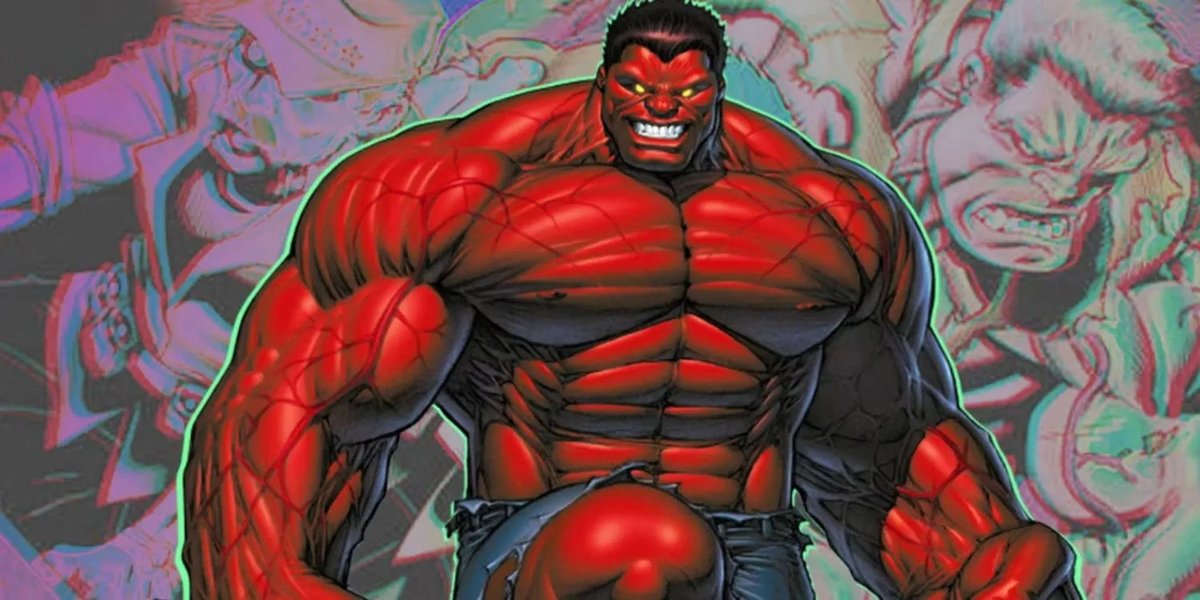
Upon ingesting these pills, the President of the United States undergoes a horrifying metamorphosis. Ross transforms into the Red Hulk, a towering, crimson behemoth of destruction. The transformation is visually stunning, brought to life by Wētā FX using motion capture and visual effects. Notably, the Red Hulk's appearance incorporates Harrison Ford's facial features into a "bear-like" physique, creating a recognizable yet monstrous visage. Interestingly, the character's signature mustache from the comics is absent in this iteration, and the Red Hulk does not speak, relying purely on brute force and terrifying presence.
In his Red Hulk form, Ross unleashes unparalleled devastation, destroying the White House and iconic surrounding D.C. monuments. It’s a literal and metaphorical tearing down of the very institutions he sought to command and protect. However, it's not brute force that stops him. Captain America (Sam Wilson) manages to calm the rampaging monster, not with a shield throw, but by appealing to the man still buried within. Wilson reminds Ross of Betty and their shared memories of cherry blossom trees – a potent symbol of his humanity and his deepest regret. This emotional appeal breaks through the gamma-fueled rage, allowing Ross to revert to his human form.
In the aftermath, Ross takes responsibility for his actions, steps down as president, and is incarcerated in the Raft, the very prison where he once sent heroes for defying him. His political ambition and personal demons ultimately lead to his own downfall, but not without a moment of profound, albeit tragic, self-awareness.
Red Hulk: Comics vs. MCU Adaptation
While the MCU's Red Hulk maintains the character's core visual and destructive power, there are notable differences from his comic book origins:
| Feature | Marvel Comics | MCU (Captain America: Brave New World) |
|---|---|---|
| Origin Story | Transformed by the Intelligencia (led by MODOK), specifically by the Leader and Doc Samson, as part of a complex scheme. | Transformed by Samuel Sterns (the Leader) with gamma-radiated pills, as an act of revenge. |
| Key Powers | Possesses immense physical strength, durability, and the ability to generate extreme heat and absorb various forms of energy (including gamma radiation). | Primarily depicted with immense strength and destructive capability. Heat generation and energy absorption powers are not explicitly shown or addressed in the film. |
| Appearance | Often depicted with a prominent mustache. | "Bear-like" physique, incorporates Harrison Ford's facial features, notably without the mustache. |
| Voice/Speech | Capable of speech and complex thought in Red Hulk form. | Does not speak in Red Hulk form. |
| Motivation | Initially, a more calculated, ruthless tactical mind. | Driven by a more primal rage and manipulation by Sterns, ultimately calmed by emotional appeal. |
| The MCU's adaptation streamlines the origin to fit existing character arcs, making Sterns' involvement a direct consequence of Ross's past actions and weaving in the personal stakes of his relationship with Betty. |
The Complex Legacy of Thaddeus "Thunderbolt" Ross
Thaddeus Ross's journey through the MCU is a masterclass in character evolution, showcasing a man whose initial role as a principled (if misguided) antagonist slowly morphs into something far more complex. He begins as a military man, a product of an older world order, utterly convinced that the chaotic arrival of superhumans demanded firm control. His personal hatred for the Hulk, born from the pain inflicted on his daughter, fueled his relentless pursuit, blurring the lines between duty and obsession.
As Secretary of State, Ross transformed into a formidable political player, leveraging legal frameworks like the Sokovia Accords to impose his will. He believed he was protecting humanity, but his methods often alienated the very heroes he sought to control, highlighting the perpetual tension between individual freedom and governmental authority that lies at the heart of the MCU's narrative. He was a figure who consistently challenged the protagonists, not always as a clear-cut villain, but often as an embodiment of the bureaucratic and systemic obstacles to freedom and self-determination.
His presidency and eventual transformation into the Red Hulk represent the ultimate irony and tragedy of his character. A man who dedicated his life to controlling the very power he abhorred ultimately succumbs to it, becoming the monster he spent decades chasing. His destructive rampage as Red Hulk, followed by his public admission of responsibility and incarceration, serves as a powerful commentary on the corrupting nature of unchecked ambition and the personal cost of neglecting one's humanity. Yet, the fact that he could be reached by an appeal to his love for Betty, a reminder of the cherry blossoms, speaks volumes. It proves that even within the most hardened and monstrous exterior, a spark of humanity, a capacity for love and regret, can still exist.
What Does Ross's Journey Tell Us About the MCU's Future?
Thaddeus Ross’s evolution from Lieutenant General to President and finally to the monstrous Red Hulk leaves an indelible mark on the Marvel Cinematic Universe. His character arc is a stark reminder of the MCU's willingness to explore the grey areas of morality, power, and accountability. His story forces us to confront difficult questions: Where does authority end and individual liberty begin? Can a system designed to protect itself ultimately become its own worst enemy?
His transformation into Red Hulk, specifically, introduces a character of immense power and complex motivations, one whose legacy is entangled with the very fabric of government and international relations. While his immediate fate in the Raft suggests a period of consequence, the sheer destructive potential of Red Hulk means his impact won't be easily forgotten. The MCU continues to evolve, delving deeper into a world populated by heroes, villains, and increasingly, those caught in the blurred lines between. Ross’s journey, culminating in his tragic, self-inflicted downfall and glimmer of redemption, offers a potent commentary on the human ambition that drives even the most powerful figures, and serves as a powerful anchor for the ongoing saga of superpowered individuals facing a very human world.