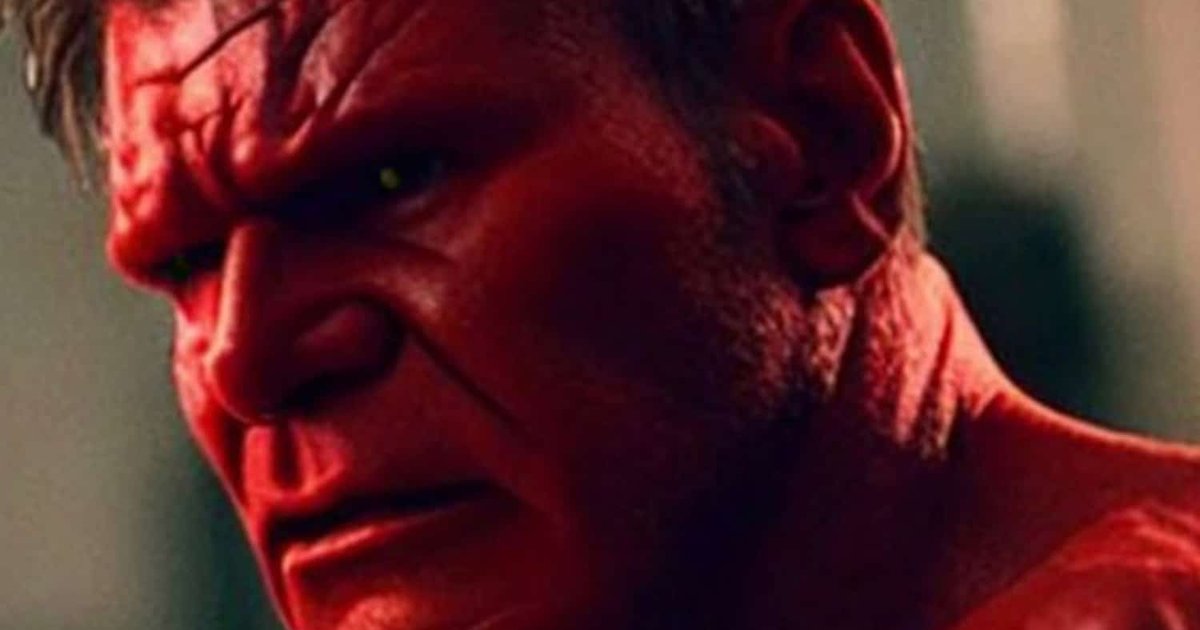
For months, the Marvel Cinematic Universe faithful buzzed with anticipation, fueled by a casting announcement that sent shockwaves through Hollywood: Harrison Ford, the legend himself, stepping into the formidable boots of General Thaddeus "Thunderbolt" Ross, widely expected to become the Red Hulk. The potential for such an iconic actor to embody a fan-favorite, powerful villain sparked countless "Fan Theories: Harrison Ford as Red Hulk," imagining epic multi-film arcs, tragic turns, and earth-shattering confrontations. But as quickly as the theories ignited, recent remarks from Ford himself have cast a surprisingly definitive shadow over those grand visions, forcing fans to recalibrate their expectations and face a potentially much shorter, sharper reality for this highly anticipated character.
It's a familiar dance for MCU aficionados: the joy of speculation, the intricate weaving of comic book lore with cinematic hints, and the fervent hope for particular outcomes. Yet, it's also a stark reminder that even the most meticulously constructed fan theories must eventually meet the concrete realities of studio plans and actor availability.
At a Glance: Red Hulk Reality Check
- Harrison Ford Takes Over: Ford was cast as Thaddeus "Thunderbolt" Ross, succeeding the late William Hurt, set to debut in Captain America: Brave New World.
- President Ross, Not Just General: Ford's portrayal begins with Ross as the newly elected President of the United States.
- Initial Hype: Early comments from Ford suggested an openness to future appearances, sparking widespread fan theories about a multi-film Red Hulk arc, potentially extending to the Thunderbolts movie.
- The "Nope" Heard 'Round the MCU: Ford's recent, explicit denial of future MCU appearances beyond Brave New World dramatically shifted expectations.
- A Self-Contained Arc? The current consensus suggests Red Hulk's story will likely be confined to Brave New World, concluding with his defeat and incarceration.
- Business Realities: Marvel's perceived box office pressures for Brave New World (despite its reported $415 million worldwide gross, attributed by Marvel to Chris Evans' absence) and strategic shifts may influence character longevity.
- Legacy Acknowledged: While Ford's tenure may be brief, it honors William Hurt's original portrayal and sets a unique tone for the character's MCU presence.
The Casting Coup: Ford Steps into Thunderbolt Ross's Boots
The late William Hurt masterfully originated the role of Thaddeus Ross, a character who served as a foundational antagonist in The Incredible Hulk back in 2008. Over the years, Hurt’s Ross evolved, becoming a more nuanced political figure in Captain America: Civil War, and later appearing in Avengers: Infinity War, Avengers: Endgame, and Black Widow. His passing in March 2022 left a significant void, and the question of who could possibly fill such shoes loomed large.
Then came the announcement in October 2022: Harrison Ford. The news electrified the fandom. Ford, a legend synonymous with iconic characters like Han Solo and Indiana Jones, bringing his gravitas and distinctive gruff charm to the MCU was monumental. This wasn't just a recasting; it felt like a statement. For many, this casting all but confirmed the long-held theory that Ross would finally make the transformation into the monstrous Red Hulk, a powerful, crimson-skinned alter-ego from the comics. The idea of Ford, even in his eighties, roaring across the screen as a CGI-enhanced behemoth, was pure fan-fiction gold.
From General to… President? Ross's Evolving MCU Role
Ford's entry isn't just a simple swap for an existing character. He isn't merely taking over General Ross's military command; he's ascending to the highest office in the land. In Captain America: Brave New World, we are introduced to Thaddeus Ross as the newly elected President of the United States. This executive elevation immediately adds new layers to the character. No longer just a military man with a vendetta, Ross as President wields immense political power, offering a fresh dimension to his inevitable confrontation with Sam Wilson's Captain America.
This pivot in Ross's public persona also neatly sidesteps the physical expectations often associated with General Ross. While fans still anticipate his eventual transformation into Red Hulk, beginning as President allows for a more cerebral, political introduction before any potential gamma-infused mayhem. It makes the eventual reveal all the more impactful, as the leader of the free world morphing into a super-powered monster holds far greater narrative weight.
The Red Hulk Speculation Machine: What Fans Hoped For
The moment Harrison Ford's casting was confirmed, the internet exploded with predictions. The notion that Ford would only portray Thaddeus Ross without transforming into Red Hulk felt almost unthinkable to many. Why cast an actor of such caliber for a role that could potentially be purely bureaucratic, especially given the comic book precedent?
Fan theories quickly coalesced around a few key ideas:
- A "Darker Future" or "Tragic Turn": Many believed Ford's Red Hulk would be a central antagonist for multiple films, perhaps grappling with the destructive nature of his new form, offering Ford a chance to explore a complex, potentially tragic villain. The sheer weight of Ford's acting presence suggested a narrative arc deserving of his talents.
- Long-Term MCU Presence: Initially, Ford himself seemed open to the possibility, stating, "I’m awaiting my new assignment. I think it will be fascinating to see where that character goes if he goes anywhere." This was interpreted as a green light for a multi-film commitment, with Red Hulk potentially becoming a major player in the MCU's evolving saga.
- A Thunderbolts Connection: One of the strongest theories posited that Ford's Red Hulk would be a significant figure in the upcoming upcoming Thunderbolts film. In the comics, Thunderbolt Ross is intrinsically linked to the Thunderbolts, often leading or forming teams of anti-heroes and reformed villains. It seemed a natural fit, offering Ford a substantial follow-up appearance and a pivotal role in the MCU's next big team-up. The thought of Red Hulk leading the charge against some looming threat was a tantalizing prospect that drove countless discussions.
These theories weren't just idle chatter; they were built on reasonable interpretations of comic lore, MCU trends, and actor interviews. The excitement was palpable, shaping a collective expectation for a major new force in the superhero landscape.
Harrison Ford's MCU Whispers: The Conflicting Statements
The journey of fan expectations often hinges on the breadcrumbs dropped by actors and studio executives. Harrison Ford, a notoriously private and direct individual, provided two very different sets of breadcrumbs that led to a significant shift in the narrative around his MCU future.
His initial comment, "I’m awaiting my new assignment. I think it will be fascinating to see where that character goes if he goes anywhere," was like gasoline on the fan theory bonfire. It suggested a veteran actor cautiously optimistic about a new venture, open to exploring a character's potential, but also leaving room for the unknown. This ambiguity, however, was quickly filled by the eager imagination of the fandom. "If he goes anywhere" was often overlooked in favor of "awaiting my new assignment," implying a continuation. This remark sustained the hope for a sprawling Red Hulk arc.
However, a more recent interview brought a sudden, decisive end to much of that speculation. When directly asked if Marvel Studios president Kevin Feige had convinced him to appear as Red Hulk again in a future movie, Ford's response was a blunt, unequivocal: "Nope."
This single word was a seismic event for fan theorists. It wasn't an ambiguous statement; it was a firm, definitive closure. The "Nope" effectively slammed the door shut on widespread speculation about Red Hulk leading the Thunderbolts, appearing in multiple phases, or having a long-term, complex character arc. It indicated that Captain America: Brave New World might indeed be the beginning, and the end, of Harrison Ford's Red Hulk.
Brave New World's Impact: A One-Shot Red Hulk?
Ford's "Nope" strongly suggests that his role as Red Hulk will be largely contained within Captain America: Brave New World. This doesn't mean his appearance won't be impactful; on the contrary, a one-off performance from an actor of his stature could still leave a lasting impression. However, it does reframe the narrative for the character significantly.
Instead of a multi-film arc building to a grand confrontation, it's more likely that Red Hulk's story in Brave New World will be concise and conclusive. We can anticipate his transformation, a significant battle against Sam Wilson's Captain America, and then a definitive resolution within the film itself. This could involve his defeat, potentially leading to his incarceration or a similar outcome that effectively removes him from the immediate narrative without necessarily killing him off.
The implications for our in-depth look at Captain America: Brave New World are clear: the film will need to deliver a powerful, self-contained Red Hulk story that satisfies the long-standing anticipation for the character, while also serving as a crucial chapter in Sam Wilson's journey as the new Captain America. This might involve Ross's political power escalating to a dangerous point, forcing Cap's hand, leading to the physical confrontation that unleashes the Red Hulk.
This approach offers both advantages and disadvantages. On one hand, it allows for a focused, high-impact portrayal without the pressure of setting up endless future appearances. On the other, it might leave some fans yearning for the deeper exploration of Red Hulk's character that a multi-film arc would have provided.
Why the Short Stint? The Business of the MCU
The decision to potentially limit Harrison Ford's Red Hulk to a single film, despite the character's rich comic book history and the actor's undeniable star power, likely stems from a complex interplay of creative, strategic, and business considerations within Marvel Studios.
First, let's look at the reported box office performance metrics provided by Marvel Studios itself. While Captain America: Brave New World reportedly grossed $415 million worldwide, Marvel Studios reportedly attributes this underperformance to the absence of Chris Evans' Steve Rogers. For comparison, other recent entries like Thunderbolts grossed $382 million, and The Fantastic Four: First Steps earned $241 million in its first week. These figures, while seemingly decent in isolation, suggest a perceived softening of market enthusiasm by the studio for films without the established draw of original Avengers. When combined with other critical and audience reception challenges in recent phases, it could lead Marvel to re-evaluate long-term character commitments for new, expensive castings.
The MCU is a colossal machine, and talent acquisition is a massive part of its operating cost. Securing an actor of Harrison Ford's caliber comes with a significant price tag and, often, less flexibility for extensive, open-ended commitments. If Marvel's internal projections or past performance of similar projects suggest that a multi-film Red Hulk arc might not yield the desired return on investment, a more contained role becomes a fiscally responsible decision.
Furthermore, the overall broader strategies for future MCU phases might be shifting. After the expansive, interconnected sagas of the Infinity Saga, Marvel might be exploring more self-contained character arcs within individual films, allowing for greater narrative flexibility without needing every single character to be a linchpin in a decade-long plan. This could be a way to manage risk, streamline storytelling, and prevent the kind of character bloat that can sometimes overwhelm new viewers.
Lastly, and perhaps most simply, Ford himself may have desired a single, impactful role. At his stage in a legendary career, the allure of a manageable, high-profile part in a blockbuster franchise might be more appealing than signing on for a demanding, multi-year commitment. His "Nope" could very well be a reflection of his personal preference and the terms agreed upon during his casting.
Deconstructing Fan Theories: Where Did We Go Wrong (and Right)?
The saga of Harrison Ford's Red Hulk theories offers a fascinating case study in the nature of fan speculation. It highlights both the incredible creativity of fandom and the inherent pitfalls of building expectations on incomplete information.
Where We Went Right:
- Anticipating the Transformation: The strongest element of the theories, the belief that Ross would become Red Hulk, remains highly plausible. Ford's "Nope" doesn't negate the transformation in Brave New World, only future appearances. Given the character's comic history and the dramatic potential, it's almost a given.
- Connecting to Broader MCU Narrative: Fans correctly identified Red Hulk's potential significance within the larger MCU, particularly with the Thunderbolts project. The idea wasn't illogical, simply, as it turns out, not in the cards for Ford's iteration.
- Reading Between the Lines (Initially): Ford's early, more open-ended comments legitimately provided fuel for anticipation. It's not wrong to be hopeful when an actor expresses curiosity about their character's future.
Where We Went Wrong: - Over-Reliance on Comic Lore: While comics provide a blueprint, the MCU consistently deviates. Red Hulk's long arc in the comics doesn't automatically translate to the screen, especially with an actor like Ford.
- Projecting Desires onto Reality: It's easy to infuse our own hopes for epic, multi-film sagas onto every new casting. The desire for more Harrison Ford often overshadowed the practicalities of a long-term commitment.
- Ignoring Nuance in Actor Statements: Ford's initial "if he goes anywhere" was a crucial piece of nuance often downplayed in the excitement. His later "Nope" clarified that nuance definitively.
- Underestimating Studio Pragmatism: Marvel, for all its creative ambition, is a business. Decisions regarding character longevity, actor contracts, and narrative flow are heavily influenced by market trends, audience reception, and financial realities.
The lesson here isn't to stop theorizing. It's to enjoy the process, but to hold those theories lightly, understanding that they are, by their nature, speculative. The true story unfolds only when the creators deliver it.
The Legacy of Thunderbolt Ross: From Hurt to Ford
The transition of Thaddeus "Thunderbolt" Ross from William Hurt to Harrison Ford is a significant moment in the MCU's history, representing both continuity and a new chapter.
William Hurt's portrayal was foundational. He imbued Ross with a stern, often morally grey authority, a man driven by duty and a deep-seated animosity towards the Hulk. He was a constant presence, a reminder of the MCU's earliest roots. His performances gave the character gravitas and a certain weary realism that made his transitions, from antagonist to reluctant political figure, believable.
Harrison Ford's brief but impactful tenure, even if confined to Captain America: Brave New World, will carry its own weight. His casting alone signals the character's importance and the studio's commitment to finding an actor who commands attention. As President Ross, Ford brings a different kind of power, one that immediately elevates the character's political stakes. His gravelly voice, world-weary gaze, and inherent authority will lend a unique texture to the Red Hulk, even if it's for a limited time.
For Red Hulk's comic book origins, the cinematic interpretation will always be distinct. The comics allowed for a lengthy exploration of Ross's transformation, his struggles, and his place within a larger superhero world. The MCU's approach, at least with Ford, appears to be a more concentrated burst of that narrative, focusing on the immediate impact and then moving on. This doesn't diminish the character; it simply adapts his story to the needs of the current cinematic landscape. It's a passing of the torch that ensures Ross, and potentially Red Hulk, remains a memorable part of the MCU tapestry, even if the torchbearer's journey is short.
The Future of Sam Wilson's Captain America
This turn of events for Red Hulk significantly impacts the trajectory of Sam Wilson's Captain America. Captain America: Brave New World is a pivotal film for Sam. It's his first solo outing fully embracing the shield, charting Sam Wilson's journey as Captain America in a post-Steve Rogers world.
If Red Hulk is defeated and then locked away, it means Sam Wilson will have faced a truly formidable, high-stakes antagonist early in his Captain America career. Defeating a character as powerful as Red Hulk, especially one who is also the President of the United States, would be a monumental achievement, firmly establishing Sam's authority and capability as the new Cap. It provides a clear, decisive victory that cements his standing without needing the villain to linger indefinitely.
This could be a strategic choice to give Sam a clean, impactful win against a major threat, allowing his future narratives to explore different types of challenges and villains without being constantly tied to the legacy of a single, powerful foe like Red Hulk. It signifies a clear break from the past, enabling Sam to forge his own path and define his own brand of heroism against a freshly defeated threat.
What This Means for the MCU's Direction
Harrison Ford's "Nope" isn't just about one character; it offers a subtle, yet significant, insight into the MCU's evolving strategic direction.
- Focused Character Arcs: It suggests a potential shift towards more self-contained character arcs for certain roles, particularly high-profile but potentially transient villains or supporting figures. Not every character needs to be set up for multiple phases. This allows for greater narrative flexibility and can make individual film stakes feel more impactful if the conflict truly resolves within that movie.
- Managing Talent Commitment: For older, legendary actors, securing a multi-film deal can be challenging and expensive. A single, powerful appearance allows Marvel to bring in A-list talent for a memorable role without demanding years of commitment. This is a smart way to infuse star power while managing production logistics.
- Prioritizing Core Heroes: If Red Hulk's arc is indeed finite, it underscores Marvel's commitment to centering the narrative on its core heroes, in this case, Sam Wilson's Captain America. The antagonists serve to challenge the hero and propel their story forward, rather than demanding extensive arcs of their own.
- Agility in a Changing Landscape: The MCU is now operating in a very different entertainment landscape than it was a decade ago. Box office pressures, streaming demands, and audience fatigue are real considerations. Being able to introduce, utilize, and resolve a character like Red Hulk effectively within a single film demonstrates an agility that could be crucial for future success. It allows Marvel to experiment, tell specific stories, and then pivot as needed, rather than being locked into long-term plans that may no longer resonate.
Beyond the Hype: Embracing the MCU's Evolving Narrative
The journey through the fan theories surrounding "Fan Theories: Harrison Ford as Red Hulk" is a microcosm of the larger MCU experience. It's a testament to the passion and imagination of the fandom, but also a valuable lesson in managing expectations. We immerse ourselves in the possibilities, construct elaborate narratives, and eagerly await the next chapter.
The definitive "Nope" from Harrison Ford doesn't diminish the excitement for Captain America: Brave New World or Ford's role within it. Instead, it reframes it. We now approach the film with a clearer understanding: this may be a singular, powerful performance, a moment for Ford to leave his indelible mark on the MCU, and for Red Hulk to make a dramatic, albeit contained, splash.
As discerning viewers and passionate fans, our best approach is to embrace the narrative as it unfolds. Enjoy the speculation, engage in the theories, but always remember that the ultimate story belongs to the creators. The MCU has always been a universe of surprises, twists, and evolutions. By letting go of preconceived notions and open-mindedly watching the actual story, we can truly appreciate the craftsmanship, the performances, and the impactful moments as they are delivered. So, get ready to witness Harrison Ford's take on President Ross and the Red Hulk in Captain America: Brave New World for what it is—a unique, potentially unforgettable chapter in the ongoing saga. You can dive deeper into all the implications for this character with Your guide to Harrison Ford Red Hulk.